
The commodity prices eased further with inflation falling marginally by 0.06 per cent to 5.61 per cent during the week ended May 07
A sharp rise in prices of fruits, vegetables and other primary items, notably poultry chicken, and costlier manufactured products pushed up inflation by 0.10 per cent to 5.94 per cent for the week ended February 21.
The study was conducted along with its research partner -- Nielsen Company in the last quarter of 2013.
Inflation shot up to 8.43 per cent in December, from 7.48 per cent in the previous month, as prices of certain food and non-food items continued to show an upward trend.

The RBI said recently that the upsurge in inflation in April was led by food and commodity prices.

RBI watchers are going to be on tenterhooks for the next 3 weeks.

Former RBI governor Raghuram Rajan on Monday said the central bank will have to raise interest rates to tame inflation and the hikes need not be considered by politicians and bureaucrats as some "anti-national" activity. Known for his frank views, Rajan also said it was important to remember that the "war against inflation" is never over. "Inflation is up in India. At some point, the RBI will have to raise rates, like the rest of the world is doing," he said in a LinkedIn post.

It would not be surprising if India, the world's largest producer of milk, has to resort to imports to meet the elevated summer demand, states Surinder Sud.
The rise has been mainly on account of increase in prices of fruits, vegetables, imported edible oils, tea, sea fish, cement and iron and steel and spices, though the index for fuel items declined during the week.
After years of high food prices, India is now witnessing a deflation, according to the government's food inflation data.
Inflation fell marginally to 6.13% for the week ended January 17, but public continued to pay higher prices for essential commodities with primary articles like fruits and vegetables, milk and many manufactured items becoming costlier.
According to official data released on Thursday, onions grew cheaper by 59.04 per cent year-on-year during the week under review, while potato prices were down by 33.76 per cent.

Prime Minister's Economic Advisory Council (PMEAC) Chairman C Rangarajan may have found the Reserve Bank of India (RBI)'s inflation projections on the higher side, but independent experts agree with the central bank and expect both wholesale and retail prices to remain high.
While inflation dropped to 0.44 per cent for the week ended March 7, the BPLR of the top five Indian banks was in the range of 12.25-16.75 per cent. In the corresponding period last year, inflation was estimated at 7.78 per cent, while lending rates were in the range of 12.25-12.75 per cent. Real interest rate is the difference between WPI-based inflation and the prevailing benchmark prime lending rate.

If you have indeed chosen your company wisely and have not paid too high a price to buy a part of it, you can indeed expect compounding to work in your favour and a great overall return over the long term. Inflation or no inflation, that would surely be a good position to be in!
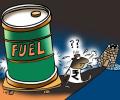
Inflation in 'fuel and power' basket rose sharply to 11.22 per cent in May from 7.85 per cent in April as prices of domestic fuel increased in line with rising global crude oil rates.

The average wholesale price inflation for FY14 will come at 5.3 per cent, while the consumer price inflation will average under 9 per cent, which would be a five-year low, the brokerage said.
"We believe loose liquidity will increasingly feed into higher inflation from current levels. However, we expect a falling output gap, the primary determinant of inflation, and currency appreciation will keep inflation within the RBI's target range of below 5 per cent," Goldman Sachs analyst Tushar Poddar said in the report.

The RBI's projection for WPI inflation for this fiscal is 5.5 per cent.

This is the lowest rate of price rise in food items in the last 18 months, when separate data for food inflation first started coming in.
A Reuters poll forecast the wholesale price index , India's main inflation measure, rose an annual 7.6 per cent in November, up from 7.45 per cent in October.
As per data released by the government on Thursday, pulses became over 9 per cent cheaper year-on-year during the period under review.

A good wheat crop this season is likely to ease the near double digit inflation in the next 2-3 months, Planning Commission Deputy Chairman Montek Singh Ahluwalia said on Wednesday.

As per the official data released on Monday, inflation in food items was 9.94 per cent in March, as against 6.07 per cent in February.

'The nominal GDP growth assumption for FY25 may be revised upwards on higher growth expectations.'

RBI targets to keep inflation at 4 per cent, (+/- 2 per cent), and its rise beyond this comfort zone will put pressure on the central bank to hike rates.

Inflation in food articles, which have a 14.3 per cent share in the WPI basket, however witnessed an increase as onion prices shot up during the month.
After falling for two weeks in a row, inflation once again firmed up marginally to 6.10 per cent for the week ended February 24 against 6.05 a week ago.

Food inflation stood at 20.18 per cent in the comparable period last year.
Inflation declined to about a 15-month low of 3.36 per cent mainly due to fall in the prices food articles like fruit and vegetables, pulses, and some manufactured items, raising hopes of cuts in the key policy rates by the Reserve Bank of India.
While the wholesale price index stood at 0.48 per cent in the previous week, the rate of price rise was 9.32 per cent during the corresponding week a year ago. During the week, the prices of eggs went up by 11 per cent, mutton 3 per cent, and fruit and vegetables and spices 2 per cent each.
Wholesale price-based inflation stood at 8.90 per cent in the corresponding week a year ago. During the week, the prices of the maize, arhar, spices and fruit went up while ragi and barley declined.

Reserve Bank of India on Friday raised short-term lending and borrowing rates.
The time frame for this is difficult to specify and much depends on stability in the foreign exchange markets, Prime Minister's key economic advisor C Rangarajan said.
The inflation rate fell marginally to 4.88 per cent during the week ended November 8 despite a rise in prices of essential items like wheat, tea, maize, textiles, paper, metal and machines.
Inflation rate breached the 5.0 per cent mark during the week ended November 1, after a short span of 14 days, as food articles, fuel, and manufactured products became costly.

After consumer price index jumped the 6.3-per cent mark in May and wholesale inflation set a record of 12.94 per cent, house economists at Swiss brokerage UBS Securities have warned that the country is facing more upside risks on the inflation front that is set to averaging at 5 per cent for the year. Rising prices of edible oils and protein rich items pushed retail inflation to a six-month high of 6.3 per cent in May, breaching the comfort level of the Reserve Bank and thus rendering reduction in interest rates a difficult proposition in the near term. Led by petrol price, that has crossed the Rs 100-mark in many states, wholesale inflation too accelerated to a record 12.94 per cent in May. While crude oil has crossed $70 a barrel on account of rising prices of crude oil and manufactured goods due to spike in commodities, and the low base of last year due to the lockdown.
 © 2026 Rediff.com - Advertise with us - Disclaimer - Privacy Policy - Sitemap - Feedback - About us - Terms of use - Grievances